
Middle aged man on boat

Proton Therapy for Prostate Cancer: Targeted Radiation

A prostate cancer diagnosis can be one of the biggest challenges you and your family will ever face. Our team is dedicated to helping you meet that challenge through supportive care using the most advanced prostate radiation treatment available. Proton therapy is a highly precise form of radiation therapy that can limit radiation exposure to healthy tissues beyond the targeted treatment area. Because the prostate is located close to the bladder and rectum, this ability to shape radiation dose is an important tool to develop an individualized treatment plan that treats the target area while still protecting nearby normal areas. Our prostate cancer specialists at Emory Proton Therapy Center will work with you to review your diagnosis, treatment options, and personal priorities to determine whether proton therapy may be appropriate for you. Emory Proton Therapy Center delivers proton therapy for prostate cancer alongside the expertise of Winship Cancer Institute of Emory University, the only NCI-Designated Comprehensive Cancer Center in Georgia.

Prostate Cancer Treatment Overview

Treatment recommendations for prostate cancer depend on factors including the cancer’s stage and risk group, PSA level, Grade Group, prior treatments, overall health, and individual preferences. Proton therapy may be used alone or in combination with other treatments depending on your diagnosis.

Prostate Cancer Conditions and Treatment Scenarios We Evaluate

  • Prostate adenocarcinoma (the most common type of prostate cancer)
  • Rising PSI or recurrent prostate cancer after surgery (post-prostatectomy “adjuvant” or “salvage” radiation)
  • Prostate sarcomas
  • Prostate small cell carcinoma
  • Pelvic lymph node metastases (prostate cancer that spreads or recurs in lymph nodes)
  • Re-irradiation

Benefits of Proton Therapy for Prostate Cancer

Proton therapy can reduce radiation exposure to some healthy tissues outside of the targeted treatment area. This is particularly relevant in prostate cancer because the prostate is close to structures such as the bladder and rectum. By shaping the dose to the prostate and stopping the beam at the target, proton therapy may help protect these important nearby structures while delivering an effective dose to the cancer cells. Depending on the individual patient and their treatment plan, proton therapy may achieve the following benefits:

  • May reduce radiation exposure to portions of the bladder and other nearby tissues.
  • May reduce unnecessary radiation exposure to gastrointestinal tissues depending on the targeted treatment area.
  • Can reduce radiation dose to portions of the rectum; rectal spacers may provide additional separation when appropriate.
  • Reduced radiation to the bone marrow and circulating lymphocytes, which may help support the function of the immune system in fighting cancer.
  • Reduced risk of developing a future second tumor or cancer, which is most relevant in younger patients, those with a good prognosis and a long-life expectancy, and those patients who may have genetic conditions putting them at higher risk for developing other cancers.

Together, these benefits demonstrate why proton therapy is considered as a viable treatment option for prostate cancer when protecting quality of life is a priority.

What to Expect With Proton Therapy

The first step in your care is a consultation. During consultation, we review your medical history, perform a physical exam, decide if any additional tests are needed, discuss radiation options that may be appropriate for your treatment plan, make recommendations, and answer questions.

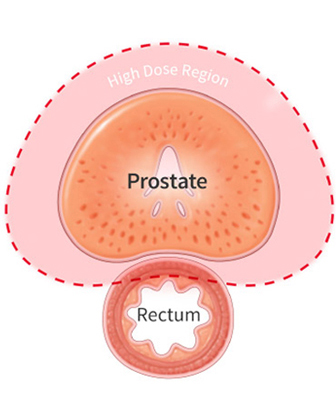
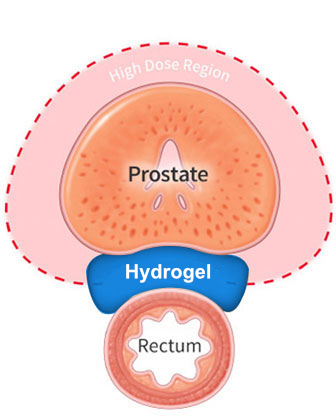
Patients with prostate cancer typically undergo a minor procedure to place three small markers in the prostate, called fiducial markers. These markers allow the treatment team to accurately align the treatment each day to the location of the prostate. Your doctor will also determine if you are eligible for placement of a unique hydrogel between the prostate and rectum (SpaceOAR™ HydrogelSpaceOAR® or Barrigel®™ rectal spacer), which creates additional space between the prostate and the rectum to further reduce radiation exposure to the rectum and dissolves after a few months.

Without Hydrogel
Hydrogel

After placement of the markers (and the hydrogel if applicable), most patients return on another day for a “simulation” or planning session. During this visit, our radiation therapists will help position you in the way you will be treated each day. A CT scan will be done to create a picture of you in the treatment position to design your radiation plan. Some patients also undergo an MRI during this visit to help identify the target for treatment. It usually takes ten days for the team to design the proton treatment plan and perform the quality assurance checks before treatment begins. This planning period is what allows our team to shape the proton dose while limiting radiation to surrounding organs.

Depending on the stage and other factors, proton therapy for prostate cancer may be delivered over two weeks, six weeks, or eight weeks of treatment. Typically, radiation is given once daily on weekdays, Monday through Friday. While some situations are treated with proton therapy alone, depending on the stage of the cancer, Gleason score, PSA level, and other factors, proton therapy may be combined with androgen deprivation (hormone therapy) or prostate brachytherapy (internal radiation). Proton therapy may also be used in patients who have had surgery or other cancer treatments as part of a comprehensive plan of care.

Like other types of radiation, proton therapy treatments are invisible and painless. Most prostate treatments average 15-30 minutes each day. Most of this time is often spent on positioning the patient, with only a few minutes of actual radiation delivery.

Patients are seen by the radiation oncology physician team weekly during treatment to monitor progress, answer questions, address concerns, and manage any side effects from treatment. Your radiation oncologist will discuss a plan to assess your response to treatment and for long-term follow-up after therapy.

Comparison of Proton and X-Ray Therapy

Proton Therapy

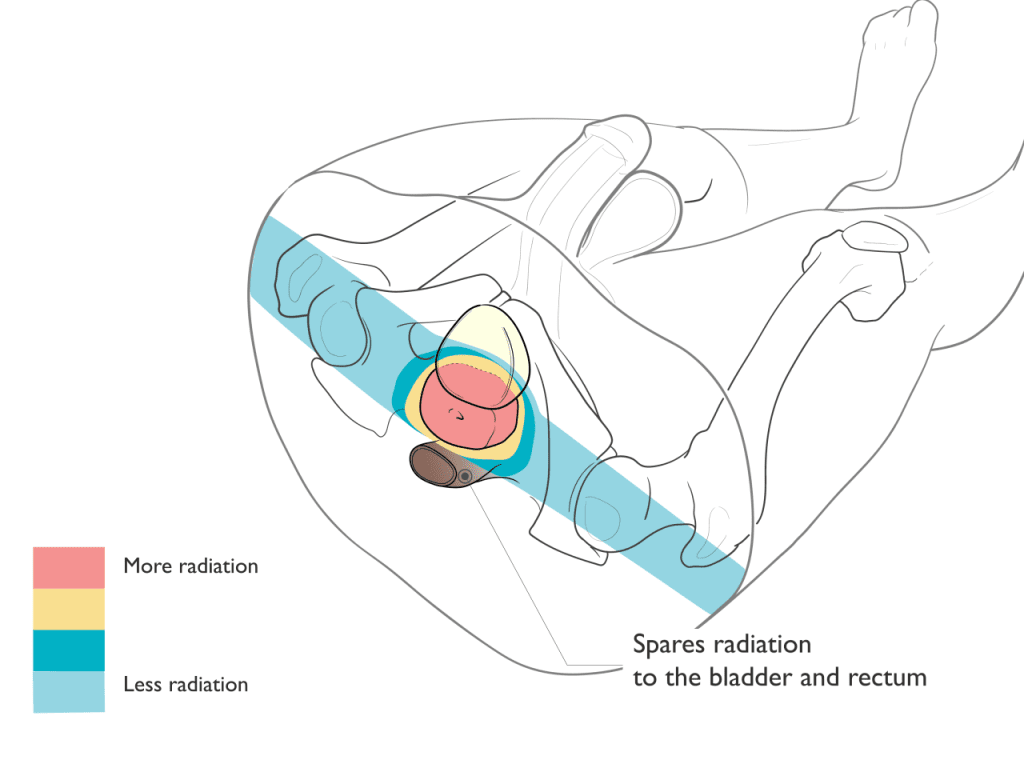
Proton therapy has a different physical dose-delivery pattern. Protons deposit most of their treatment dose at a planned depth and then stop, which can reduce radiation exposure beyond the target. 

X-ray Therapy

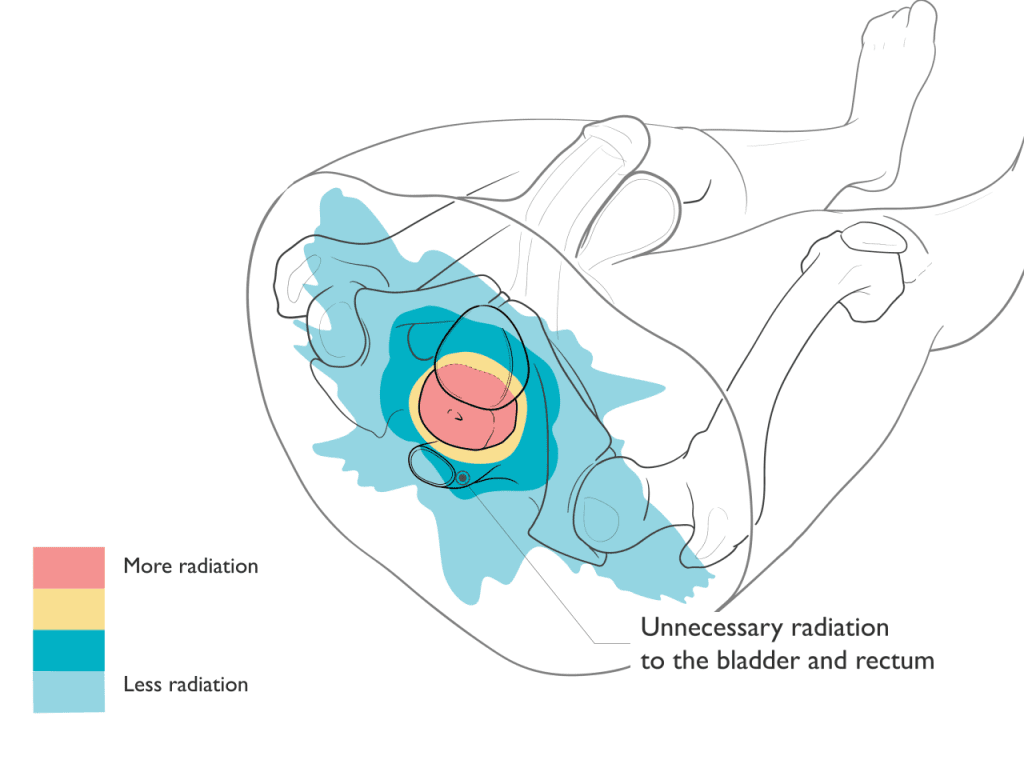
Modern photon radiation therapies such as intensity-modulated radiation therapy (IMRT) can shape radiation closely around a tumor. Unlike proton beams, however, photon beams continue beyond the treatment target, resulting in an exit dose. The amount of radiation received by surrounding normal tissues varies according to the individual treatment plan and may result in increased radiation dose to normal healthy tissues and organs.

Proton Therapy Spares Radiation to the Bladder and Rectum

Proton Therapy for Prostate Cancer Illustration
Proton Therapy
Xray Therapy for Prostate Cancer Illustration
X-Ray Therapy

Hydrogel: Reducing Radiation Exposure ​

The prostate and rectum are located very close to each other and are separated only by a small space. When undergoing proton therapy for prostate cancer, your doctor will determine if you are eligible for placement of a unique hydrogel between the prostate and rectum (SpaceOAR™ Hydrogel or Barrigel™ rectal spacer. The hydrogel creates additional space between the prostate and the rectum to reduce radiation exposure to the rectum further, thereby minimizing unwanted side effects and potential injury to the rectum during treatment.

The hydrogel is placed in a minimally invasive procedure done within our center, and it remains inside the body throughout treatment. The biocompatible gel naturally dissolves after a few months and is cleared in your urine.

Rectal spacer placement is not appropriate for every patient and, like any medical procedure, involves potential risks. Your care team may discuss whether a spacer is appropriate for you and review its potential benefits and risks.

Schedule a Consultation

Not All Prostate Cancer Is the Same

When you are first diagnosed with prostate cancer, a natural response is to wonder, “How bad is it?” During consultation, our radiation oncologists evaluate several factors to perform a “risk stratification” of prostate cancer. Risk stratification helps your care team estimate how likely the cancer is to grow, spread, or recur and helps guide treatment recommendations.

IMPORTANCE OF CONSULTATION

A prostate cancer diagnosis can involve unfamiliar terminology, tests, procedures, and treatment decisions. During your consultation, our radiation oncologists will help you understand your options and the factors most relevant to your care.

Understanding PSA and Prostate Cancer

Prostate-specific antigen (PSA) is a protein produced by prostate cells and measured through a blood test. PSA testing can play an important role in prostate cancer screening, evaluating a diagnosed prostate cancer, and monitoring response after treatment.

A PSA result is not interpreted on its own. Your doctor will consider your PSA level along with factors such as your age, medical history, prostate size, biopsy results, Gleason score or Grade Group, and cancer stage to better understand your individual diagnosis and treatment options.

After treatment, PSA testing is also commonly used to monitor how the cancer is responding and to watch for any signs that it may have returned.

PSA levels and recommendations for testing can vary from person to person. Your physician can explain what your PSA results mean in the context of your individual health and prostate cancer diagnosis.

Prostate Cancer Risk Groups

The National Comprehensive Cancer Network (NCCN) provides one of the most commonly used risk stratification methods for prostate cancer. Using PSA, Grade Group, the T stage, and other factors, the NCCN has six risk groups:

  • Very low risk. Active surveillance is recommended for most patients. Active surveillance involves careful monitoring so that curative treatment may be offered if there are any future signs of the cancer becoming more aggressive. More than half of patients in active surveillance are able to safely avoid treatment for at least 10 years.
  • Low risk. Active surveillance is recommended for most patients.
  • Favorable intermediate risk. Active surveillance remains an option. Additional tests may help decide whether to pursue treatment rather than active surveillance. Both radiation (including proton therapy) and surgery may be treatment options.
  • Unfavorable intermediate risk. Treatment is generally recommended unless advanced age or other medical problems predict a limited life expectancy. Both radiation (including proton therapy) and surgery may be treatment options. Androgen deprivation therapy is likely to be recommended.
  • High risk. Treatment is generally recommended. Both radiation (including proton therapy) and surgery may be treatment options. Androgen deprivation therapy is recommended.
  • Very high risk. Treatment is generally recommended. Both radiation (including proton therapy) and surgery may be treatment options. Androgen deprivation therapy is recommended.

Contact Emory Proton Therapy Center Today

Every cancer treatment story is different, and the questions that come with it deserve real answers from people who treat this every day. Our team is willing to help talk things through, walk through options, and bring clarity to a decision that’s not always easy to make. As part of Emory Healthcare and Winship Cancer Institute of Emory University, we bring multidisciplinary expertise to develop a personalized treatment plan. To start a conversation, contact us or request a consultation online.

Prostate Cancer FAQ

Proton therapy for prostate cancer is a precise radiation treatment targeting prostate cancer cells using proton beams, minimizing damage to surrounding healthy tissues. Since protons release a majority of their energy at the tumor, less radiation reaches nearby organs. Proton therapy may help reduce certain side effects in comparison to standard X-ray radiation.

Our specialists analyze each unique case to tailor a proton therapy plan, ensuring the most effective and individualized approach for prostate cancer. During your consultation, our care team will review the diagnosis to determine an appropriate treatment approach. 

Each session typically lasts around 15-30 minutes, and the total treatment duration varies based on the specific prostate cancer case. It’s important to note that the actual radiation beam is only on for a few minutes, and that a full course of treatment lasts between two, six, or eight weeks, depending on the size of the tumor. 

Each session typically lasts around 15-30 minutes, and the total treatment duration varies based on the specific prostate cancer case.

Many insurance plans cover proton therapy for prostate cancer. Our team can assist in verifying your coverage and providing financial guidance. Coverage varies by plan, diagnosis, and our team can help support along the way.

Patient Stories

Studies on Proton Therapy in Prostate Cancer

Our team has identified these studies as examples of the clinical benefits of proton therapy in prostate cancer.

{ "@context": "https://schema.org", "@type": "MedicalProcedure", "name": "Proton Therapy for Prostate Cancer", "alternateName": "Proton Beam Therapy for Prostate Cancer", "description": "Proton therapy allows physicians to deliver high-dose, targeted radiation to prostate tumors while minimizing exposure to nearby healthy tissue. This approach can reduce the risk of side effects such as erectile dysfunction, urinary issues, and gastrointestinal symptoms. Treatment typically involves daily sessions over several weeks.", "howPerformed": "Proton therapy involves using a precision laser-like proton beam to target cancerous tumors with minimal impact on surrounding healthy tissue. It is performed in specialized radiation centers equipped with advanced imaging and delivery systems.", "bodyLocation": "Prostate", "followup": "Patients typically attend follow-up sessions for imaging and monitoring of cancer response post-treatment.", "preparation": "Consultation and planning with a radiation oncologist, imaging studies such as MRI or CT scans, and creating a personalized treatment plan.", "procedureType": ["Non-invasive", "Radiation therapy"], "url": "https://emoryproton.com/cancers-treated/prostate-cancer/", "relevantSpecialty": "Radiation Oncology", "study": [ { "@type": "MedicalStudy", "name": "Clinical Trials in Proton Therapy", "url": "https://emoryproton.com/patient-support/clinical-trials/" } ] }